
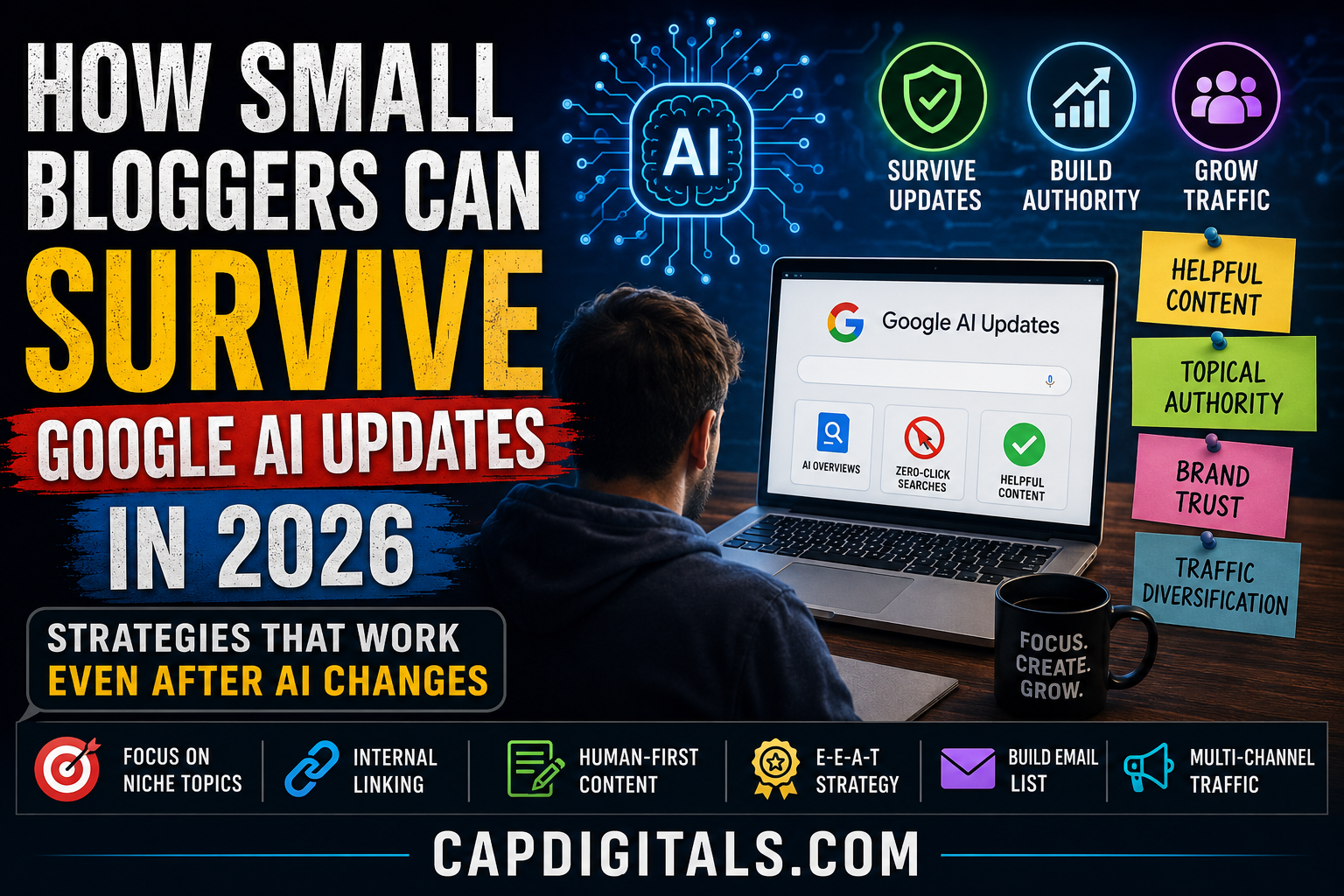
Small bloggers are facing one of the biggest internet shifts in recent years.
For a long time, blogging felt relatively simple.
People researched keywords, published articles, built backlinks, ranked on Google, and slowly grew organic traffic over time.
That process helped thousands of independent creators build websites, affiliate businesses, and online income streams from home.
But in 2026, the blogging world feels much more uncertain.
Google AI updates, AI-generated content, zero-click searches, and changing search behavior are making many smaller website owners nervous about the future.
Some bloggers are seeing traffic drops.
Others are struggling to grow despite publishing content consistently.
And honestly, many smaller creators now feel like competing against large authority websites has become harder than ever before.
But despite all these changes, small bloggers still have real opportunities.
The internet is evolving — not ending.
Why Small Bloggers Are Feeling More Pressure in 2026
The internet has become much more competitive over the last few years.
AI tools now allow anyone to generate huge amounts of content quickly.
As a result, search engines are flooded with:
- mass AI articles
- generic SEO content
- thin affiliate pages
- repetitive blog posts
every single day.
Because of this, Google’s systems are becoming increasingly selective about which websites deserve visibility.
And honestly, this shift is affecting smaller websites the most.
Many small bloggers feel trapped between:
- large media brands
- AI-generated content farms
- high-authority competitors
which makes organic growth feel slower and more difficult.
Google AI Updates Changed the Blogging Landscape
Google’s modern AI-driven updates are focusing heavily on:
- helpful content
- user trust
- expertise
- topical authority
- website reputation
A few years ago, some websites could rank simply by publishing huge quantities of articles targeting low-competition keywords.
But in 2026, quantity alone is no longer enough.
Google increasingly wants to rank websites that genuinely help users instead of websites created mainly for search engine traffic.
That change is creating challenges for many bloggers — but it is also creating opportunities.
AI Content Is Creating a Huge Quality Problem
One major issue affecting modern blogging is the explosion of AI-generated content online.
AI tools can absolutely help creators work faster.
They can assist with:
- research
- content planning
- SEO structure
- headline ideas
- workflow improvement
But many websites are now abusing AI by publishing:
- low-value articles
- rewritten content
- thin informational pages
- mass-produced blog posts
without adding genuine expertise or useful insights.
Readers often notice this immediately.
And honestly, search systems are becoming better at recognizing low-quality content too.
That’s why human-focused writing is becoming increasingly valuable again.
Zero-Click Searches Are Reducing Traffic Opportunities
Another major challenge for small bloggers is the rise of zero-click searches.
Google increasingly answers user questions directly inside search results through:
- Google AI Overview
- featured snippets
- AI summaries
- instant answers
This means users sometimes get the information they need without clicking websites at all.
Naturally, many bloggers are worried about this trend.
Related Reading:
Zero-Click Searches Explained
So… Can Small Bloggers Still Survive?
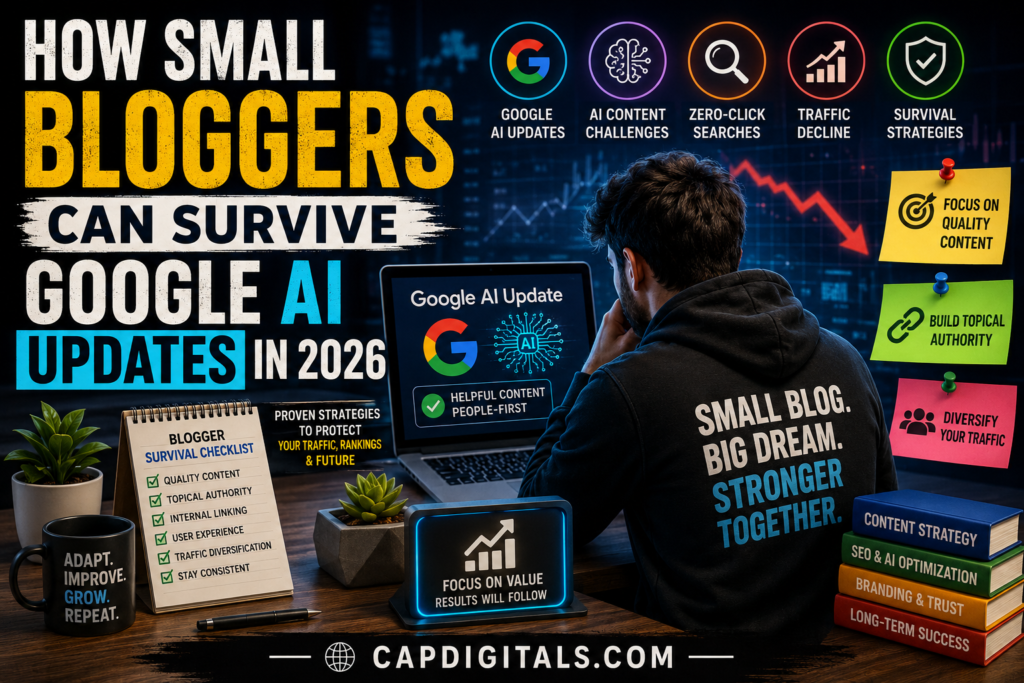
Yes — absolutely.
But the strategy needs to evolve.
The old shortcut-based blogging model is becoming much less reliable.
Today, smaller bloggers need to focus more on:
- trust-building
- topic depth
- content quality
- real expertise
- brand authority
In simple words:
Small websites now need to look genuinely useful instead of simply “SEO optimized.”
Topical Authority Is Becoming Extremely Important
One of the biggest SEO shifts happening right now is the rise of topical authority.
Google increasingly wants websites to deeply cover connected topics instead of publishing random unrelated articles.
For example, if a website focuses on:
- SEO
- AI tools
- blogging
- affiliate marketing
- online income
those topics naturally strengthen each other.
This creates stronger trust signals for search systems.
Related Reading:
Why Internal Linking Matters More Than Before
Many smaller bloggers underestimate the importance of internal linking.
Strong internal linking helps search engines understand:
- website structure
- topic relevance
- content relationships
- authority clusters
And honestly, internal links also improve user experience significantly.
When readers continue exploring related articles, websites often gain:
- better engagement
- longer session duration
- stronger authority signals
over time.
Human Writing Is Becoming a Competitive Advantage
Ironically, the rise of AI content may actually help genuine human bloggers stand out more clearly.
The internet is increasingly filled with repetitive robotic articles.
A lot of them technically look “optimized,” but they often lack:
- real insight
- natural storytelling
- human perspective
- personal understanding
Readers notice this difference quickly.
And honestly, trustworthy human writing still matters enormously online.
Small Bloggers Should Focus on Building a Brand
One major mistake many smaller websites make is acting like disposable content sites.
Modern blogging increasingly rewards websites that feel like real brands.
That includes:
- consistent quality
- clear niche identity
- helpful content
- reader trust
- professional structure
Search systems increasingly want to recommend websites users can trust long term.
Useful Resources:
Traffic Diversification Is Becoming Essential
Depending only on Google traffic is becoming riskier every year.
Smart bloggers are increasingly building audiences through:
- YouTube
- Telegram
- email newsletters
- social media
- short-form content
This creates more stability when search rankings fluctuate.
And honestly, traffic diversification may become one of the most important blogging strategies moving forward.
What Type of Content Still Performs Well?
Despite all the changes happening online, genuinely useful content still performs surprisingly well.
Some content types that continue showing strong potential include:
- detailed guides
- step-by-step tutorials
- real comparisons
- experience-based insights
- problem-solving content
- deep educational resources
Search engines still need high-quality sources for AI-powered search systems.
That creates opportunities for smaller creators willing to focus on real value.
Can Small Bloggers Compete Against Big Websites?
Yes — but usually not by copying them directly.
Large authority websites often dominate extremely broad keywords.
Smaller bloggers usually perform better by:
- targeting focused niches
- covering specific problems
- building topic depth
- creating specialized expertise
Smaller websites often have more flexibility and authenticity too.
And honestly, authenticity is becoming increasingly valuable online.
What Smart Bloggers Are Doing Right Now
Most experienced bloggers are not panicking.
Instead, they are adapting to the new internet environment.
Right now, smarter creators are focusing heavily on:
- topical authority
- helpful content
- human-focused writing
- AI-friendly formatting
- brand trust
- content quality
This strategy appears much safer compared to relying on old SEO shortcuts.
The Future of Blogging Still Has Opportunities
The blogging industry is definitely changing.
AI search, Google updates, and zero-click searches are reshaping how websites grow online.
But despite all those changes, one important reality still remains true:
The internet still needs trustworthy information.
Search systems still need reliable content sources.
And readers still value genuine human expertise.
That means smaller bloggers still have real opportunities if they focus on:
- quality
- trust
- consistency
- expertise
- long-term authority
instead of shortcuts.
Final Thoughts
Small bloggers are definitely facing a more competitive internet in 2026.
Google AI updates, AI-generated content, and changing search behavior are creating new challenges for independent creators.
But blogging itself is not ending.
The internet is simply evolving toward higher-quality, more trustworthy, and more human-focused content.
And honestly, smaller bloggers who adapt early may still build extremely strong websites in the years ahead.
Further Reading:

Adeeb Malik is the founder of Capdigitals, where he shares practical insights on digital marketing, blogging, SEO, and online earning. He focuses on simplifying complex strategies into easy, actionable steps for beginners. The content is based on research, real-world concepts, and learning resources. All information is for educational purposes only and does not constitute financial or business advice.