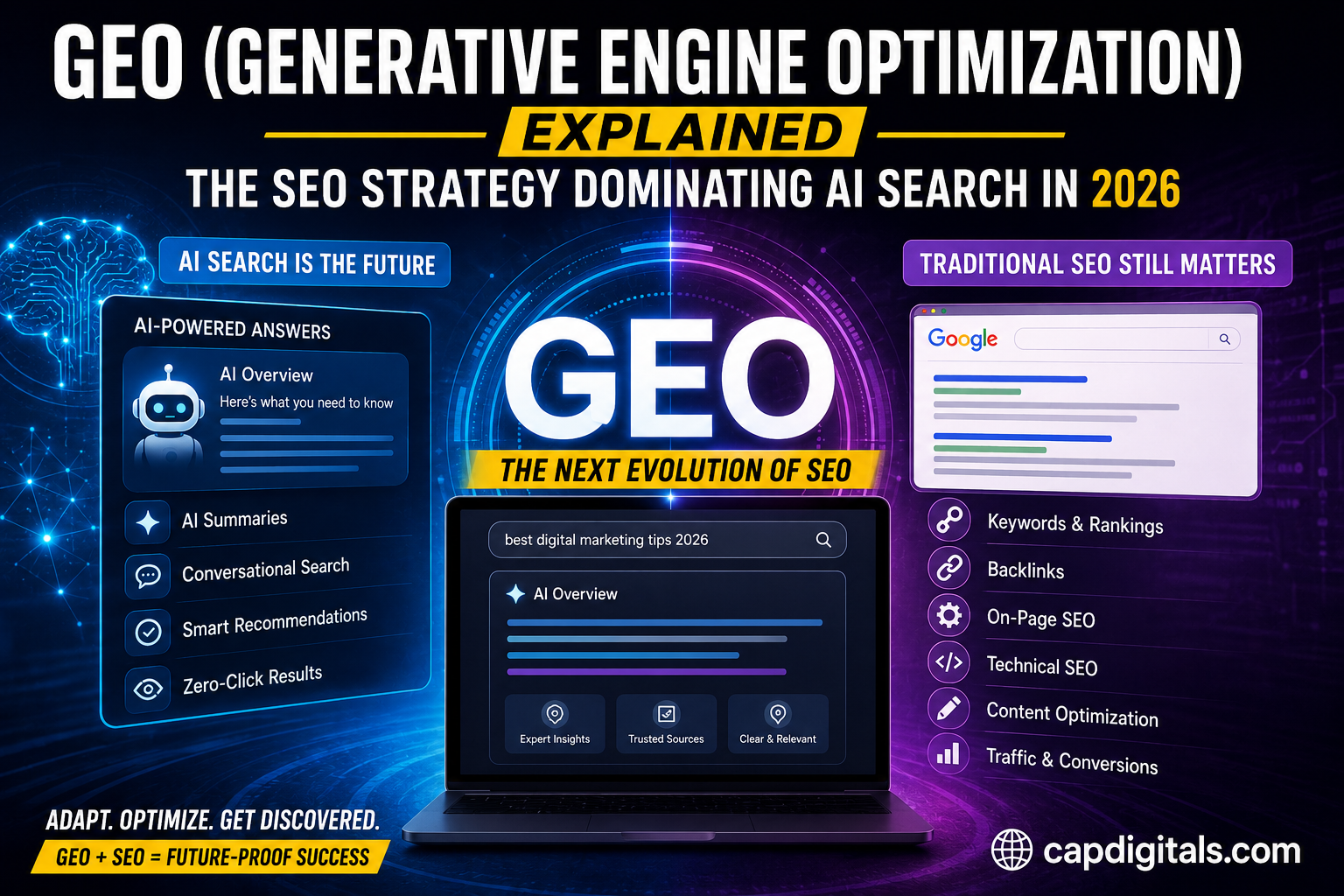
Generative Engine Optimization is becoming one of the biggest SEO trends in 2026 as AI-powered search rapidly changes how websites get traffic online.
Most people haven’t fully noticed it yet, but search engines are changing faster than they have in years.
For a long time, traditional SEO was mostly about one goal:
Ranking webpages higher on Google.
Bloggers researched keywords, built backlinks, optimized titles, published articles regularly, and tried to increase traffic from organic search results.
That system worked surprisingly well for a very long time.
But in 2026, the internet is moving into a completely different phase.
AI-powered search experiences are now changing how people consume information online. Google AI Overview, SearchGPT-style search, conversational AI systems, and zero-click answers are reducing the need for users to visit websites the same way they did before.
And because of that, a new term has started spreading rapidly inside the SEO industry:
Generative Engine Optimization (GEO)
Many bloggers still don’t fully understand what GEO actually means.
Some people think it’s just another SEO buzzword. Others believe GEO will completely replace traditional SEO.
Honestly, neither extreme is fully correct.
But one thing is becoming very obvious:
Websites that ignore AI search optimization completely may struggle much more over the next few years.
What Is Generative Engine Optimization (GEO)?
Generative Engine Optimization, often called GEO, is the process of optimizing content for AI-powered search systems instead of focusing only on traditional search rankings.
In simple words:
- Traditional SEO tries to rank webpages.
- GEO tries to make content visible inside AI-generated answers.
This is a major difference.
Instead of only competing for blue links on Google Search, websites are now also competing for visibility inside:
- Google AI Overview
- AI-generated summaries
- SearchGPT-style responses
- AI assistants
- conversational search engines
And honestly, this changes the game completely.
Why GEO Is Suddenly Becoming Important
User behavior online is changing rapidly.
People today want:
- faster answers
- shorter research time
- direct explanations
- conversational search experiences
Most users no longer want to open ten websites just to find one simple answer.
Google understands this perfectly.
That’s one reason why AI-generated search experiences are expanding so aggressively in 2026.
And this is exactly where GEO enters the picture.
Because if AI systems are generating answers directly on search pages, websites now need strategies that help their content become part of those AI responses.
Traditional SEO vs GEO: What’s the Real Difference?
| Traditional SEO | GEO |
|---|---|
| Focused on webpage rankings | Focused on AI answer visibility |
| Traffic through blue links | Traffic through AI-generated discovery |
| Heavy keyword optimization | Context and clarity matter more |
| Ranking-focused | Citation and visibility-focused |
| Quantity often worked | Authority and trust matter more |
This doesn’t mean traditional SEO is dead.
But GEO is clearly becoming an additional layer of modern search optimization.
Why Bloggers Are Nervous About AI Search
A lot of bloggers started noticing something strange over the last year.
In many cases:
- impressions increased
- rankings looked stable
- search visibility remained decent
…but actual clicks started dropping.
And honestly, for many smaller publishers, that was frustrating.
The reason is simple:
Users are increasingly getting answers directly from AI-generated summaries without opening websites.
This trend is often called:
Zero-click search behavior.
Related Reading:
Zero-Click Searches Explained: How Bloggers Can Still Get Traffic in 2026
How AI Systems Decide Which Websites to Use
One important thing many people misunderstand is this:
AI systems do not randomly choose websites.
Although companies like Google do not publicly reveal every ranking signal, several patterns are becoming easier to notice.
AI search systems appear to prefer content that is:
- clear
- well-structured
- trustworthy
- easy to summarize
- topically authoritative
- factually consistent
This is one reason why messy low-quality content struggles much more in AI-powered search environments.
Why Topical Authority Matters More Than Ever
Topical authority is becoming one of the biggest concepts in modern SEO and GEO.
Instead of publishing random unrelated articles, successful websites now focus on deeply covering connected topics.
For example:
- AI search
- SEO
- blogging future
- digital marketing
- AI tools
all naturally connect together.
When Google sees multiple strong interconnected articles around one niche, it becomes easier for search systems to trust the website.
Related Articles:
SearchGPT vs Google Search 2026
Google Search Leak Ranking Factors 2026
Google AI Overview SEO Guide 2026
AI SEO vs Traditional SEO
Human Content Is Becoming Valuable Again
Ironically, the rise of AI-generated content may actually increase the value of genuinely human writing.
The internet is flooded with repetitive AI articles right now.
A lot of those articles technically look “optimized,” but they feel robotic once people start reading them carefully.
Readers notice that.
And honestly, search systems are getting better at recognizing low-value content too.
That’s why content containing:
- real observations
- clear expertise
- natural language
- human insights
- unique perspectives
is becoming increasingly important.
Can GEO Replace Traditional SEO Completely?
Probably not.
At least not anytime soon.
Traditional SEO fundamentals still matter:
- website speed
- technical SEO
- mobile optimization
- internal linking
- content quality
- site structure
But GEO is clearly becoming another major layer on top of traditional SEO.
In many ways, the future probably belongs to websites combining:
- traditional SEO
- AI optimization
- topical authority
- human-focused content
- brand trust
How Smart Bloggers Are Adapting in 2026
Most experienced creators are not panicking.
They’re adapting instead.
Right now, smarter publishers are focusing more on:
- deep topic coverage
- authority building
- clear content structure
- brand reputation
- human-first writing
- AI-friendly formatting
And honestly, this strategy appears much safer for long-term growth compared to relying only on outdated SEO tricks.
The Future of Search Will Be Very Different
The internet is entering a completely new phase.
AI-powered search systems are already changing:
- organic traffic patterns
- click behavior
- SEO strategy
- content creation
- blogging itself
Some low-quality websites may disappear completely over the next few years.
But genuinely useful websites still have huge opportunities ahead.
In fact, many experts believe trusted authority websites may become even more valuable after AI search becomes mainstream.
What Actually Seems to Work Best Right Now?
After watching how AI search is evolving, one thing feels increasingly obvious:
The future probably belongs to websites that combine:
- real expertise
- strong topical authority
- traditional SEO basics
- human-focused writing
- AI-friendly optimization
In simple words:
GEO is not replacing SEO completely. It’s evolving how modern search works.
Final Thoughts
Generative Engine Optimization is still a relatively new concept, but its importance is growing extremely fast.
As AI-powered search systems continue expanding, websites that understand GEO early may gain major advantages over the next few years.
At the same time, one thing still remains true:
Search engines ultimately want genuinely useful information for real users.
That principle has survived every major Google update so far.
And honestly, it will probably continue surviving future AI search systems too.
Further Reading:

Adeeb Malik is the founder of Capdigitals, where he shares practical insights on digital marketing, blogging, SEO, and online earning. He focuses on simplifying complex strategies into easy, actionable steps for beginners. The content is based on research, real-world concepts, and learning resources. All information is for educational purposes only and does not constitute financial or business advice.