
A lot of bloggers are noticing something strange lately.
Even after publishing more content consistently, many websites are still struggling to grow on Google like they used to a few years ago.
One major reason behind this shift is that Google now understands topics much more deeply than before. Instead of ranking isolated articles individually, modern search systems increasingly evaluate how well an entire website covers connected subjects together.
This is exactly why Content Cluster Strategy has become such an important SEO concept in 2026.
A few years ago, many bloggers focused mostly on individual keywords and standalone articles.
That strategy worked for a while.
But modern SEO increasingly rewards websites that deeply organize and connect related topics together.
And honestly, this is exactly where content clusters become extremely important.
Instead of publishing random disconnected articles, websites now build stronger authority by creating structured groups of interconnected content around one major subject.
This strategy helps search engines better understand:
- website expertise
- topic relationships
- content depth
- authority signals
And in 2026, those signals matter more than ever before.
What Is a Content Cluster Strategy?
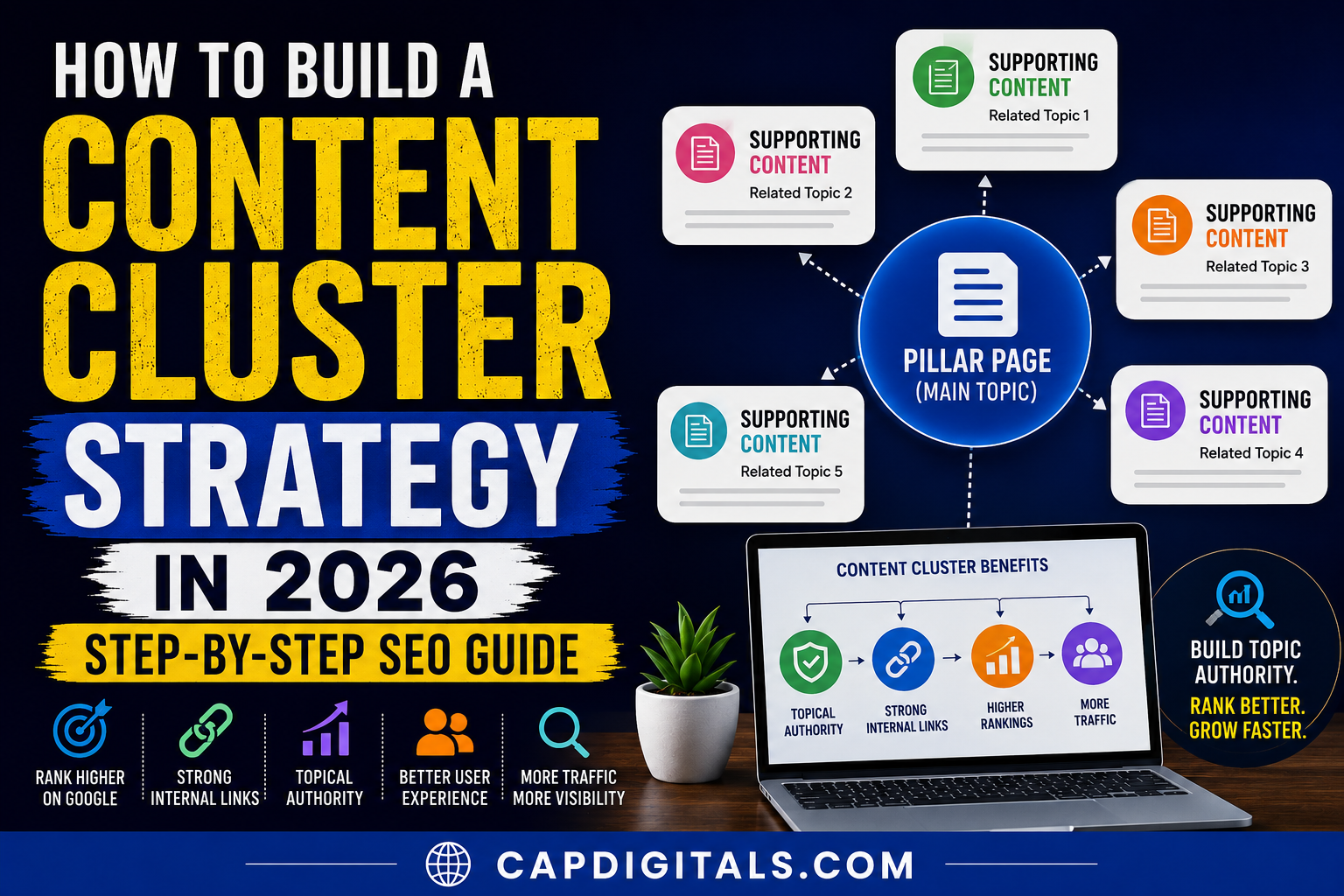
A content cluster strategy is an SEO structure where multiple related articles connect together around one main topic.
The system usually includes:
- a main pillar article
- supporting topic articles
- strong internal linking
- related keyword coverage
Instead of treating every article separately, the website builds an interconnected topic ecosystem.
For example:
A website focused on SEO could create:
- Topical Authority Explained
- Google AI Overview SEO Guide
- Zero-Click Searches Explained
- AI SEO vs Traditional SEO
- How Small Bloggers Can Survive Google AI Updates
- Content Cluster Strategy Guide
All these articles naturally strengthen each other.
That creates stronger topical authority signals for search systems.
Why Content Clusters Matter More in 2026
Google’s search systems are becoming increasingly semantic.
Many smaller bloggers now feel overwhelmed trying to compete against huge authority websites and mass AI-generated content online.
Search engines no longer focus only on isolated keywords.
Modern AI-powered search increasingly analyzes:
- topic depth
- semantic relationships
- website structure
- content expertise
- user value
AI-generated content has also flooded the internet with repetitive low-quality articles.
Because of this, Google increasingly prefers websites that clearly demonstrate expertise through connected topic coverage.
And honestly, content clusters help websites achieve exactly that.
How Google Understands Topic Relationships
Google tries to understand websites similarly to how humans understand expertise.
For example:
If someone consistently talks about:
- SEO
- AI search
- blogging
- content strategy
- Google updates
they naturally appear more knowledgeable in that field.
The same thing happens with websites.
When multiple connected articles support each other through strong internal linking and semantic relevance, Google gains stronger confidence about the website’s expertise.
What Is a Pillar Page?
A pillar page is the central article inside a content cluster.
It usually covers a broad topic in depth while linking toward supporting articles for more detailed information.
For example:
A pillar article about “SEO in 2026” could internally link toward:
- AI SEO strategies
- Google AI Overview
- topical authority
- internal linking
- content clusters
- zero-click searches
This creates a strong topic hierarchy for both users and search systems.
Supporting Articles Strengthen the Entire Cluster
Supporting articles are extremely important because they help cover specific subtopics deeply.
For example:
Instead of explaining everything inside one giant article, websites create multiple focused supporting pages.
This improves:
- content depth
- keyword coverage
- semantic relevance
- user experience
while strengthening the entire content ecosystem.
Internal Linking Is the Backbone of Content Clusters
Internal linking plays one of the biggest roles in content cluster strategy.
Strong internal links help search engines understand:
- topic relationships
- content hierarchy
- authority flow
- website structure
And honestly, internal links also improve user engagement significantly.
When visitors continue reading related content, websites often gain:
- better session duration
- higher engagement
- stronger trust signals
over time.
Related Reading:
Semantic SEO and Content Clusters Work Together
Semantic SEO focuses on understanding meaning and topic relationships instead of only exact keywords.
Modern search engines increasingly understand:
- related phrases
- topic context
- entity relationships
- search intent
Content clusters naturally support semantic SEO because they organize connected ideas together in a structured way.
This helps search systems understand websites much more clearly.
How AI Search Is Changing SEO Strategy
AI-powered search systems are transforming how information appears online.
Google AI Overview increasingly summarizes information directly inside search results.
This means websites now need stronger trust and authority signals to remain competitive.
And honestly, content clusters help build those signals naturally.
Related Reading:
How Small Websites Can Use Content Clusters
Many smaller bloggers believe content clusters only work for large websites.
Honestly, smaller websites can benefit even more from structured content strategies.
Instead of chasing random traffic, small websites should focus deeply on one niche.
For example:
- AI SEO
- affiliate marketing
- blogging growth
- creator economy
- digital marketing
When smaller websites consistently build connected content around one niche, search engines begin understanding their expertise more clearly.
Content Clusters Improve User Experience Too
Many people think content clusters only help SEO.
But honestly, they improve user experience significantly too.
Visitors can easily:
- explore related topics
- learn step-by-step
- find supporting information
- understand broader concepts
instead of jumping randomly between disconnected pages.
This creates a more professional and trustworthy website experience.
Common Content Cluster Mistakes
Many websites attempt content clusters incorrectly.
Some common mistakes include:
- publishing random unrelated articles
- weak internal linking
- thin supporting content
- keyword stuffing
- duplicate topic coverage
And honestly, simply creating many articles alone does not automatically build authority.
The content must genuinely connect together logically.
Human-Focused Writing Is Still Extremely Important
AI-generated content is growing rapidly online.
Because of this, genuine human-focused writing is becoming increasingly valuable.
Readers can often feel the difference between:
- robotic SEO writing
- real human explanations
Search engines are increasingly rewarding:
- helpful content
- natural writing
- real expertise
- clear explanations
instead of mass-produced AI spam content.
Can Content Clusters Help Rankings?
Yes — significantly.
Strong content clusters often improve:
- topical authority
- internal linking signals
- keyword coverage
- user engagement
- crawlability
which together can strengthen organic visibility over time.
But honestly, content clusters usually work best as a long-term strategy instead of a quick ranking shortcut.
What Smart SEO Websites Are Doing in 2026
Most experienced SEO-focused websites are increasingly organizing content through:
- topic hubs
- pillar pages
- semantic clusters
- internal linking systems
- authority-based structures
This approach appears much safer compared to relying on isolated keyword articles.
Will Content Clusters Become Even More Important?
Probably yes.
As AI-powered search continues evolving, search engines will likely depend even more on:
- topic expertise
- semantic relationships
- authority signals
- content ecosystems
That means websites with strong content structures may gain even bigger advantages in the future.
Final Thoughts
Content Cluster Strategy is becoming one of the most important SEO systems in 2026.
Google increasingly wants websites that demonstrate:
- deep expertise
- topic relevance
- strong structure
- helpful content
- clear authority
instead of websites publishing disconnected random articles purely for traffic.
And honestly, smaller websites willing to focus deeply on one niche still have enormous opportunities ahead.
The internet is becoming more competitive — but it is also rewarding organized expertise more clearly than ever before.
Useful Resources:

Adeeb Malik is the founder of Capdigitals, where he shares practical insights on digital marketing, blogging, SEO, and online earning. He focuses on simplifying complex strategies into easy, actionable steps for beginners. The content is based on research, real-world concepts, and learning resources. All information is for educational purposes only and does not constitute financial or business advice.