
Quick Summary
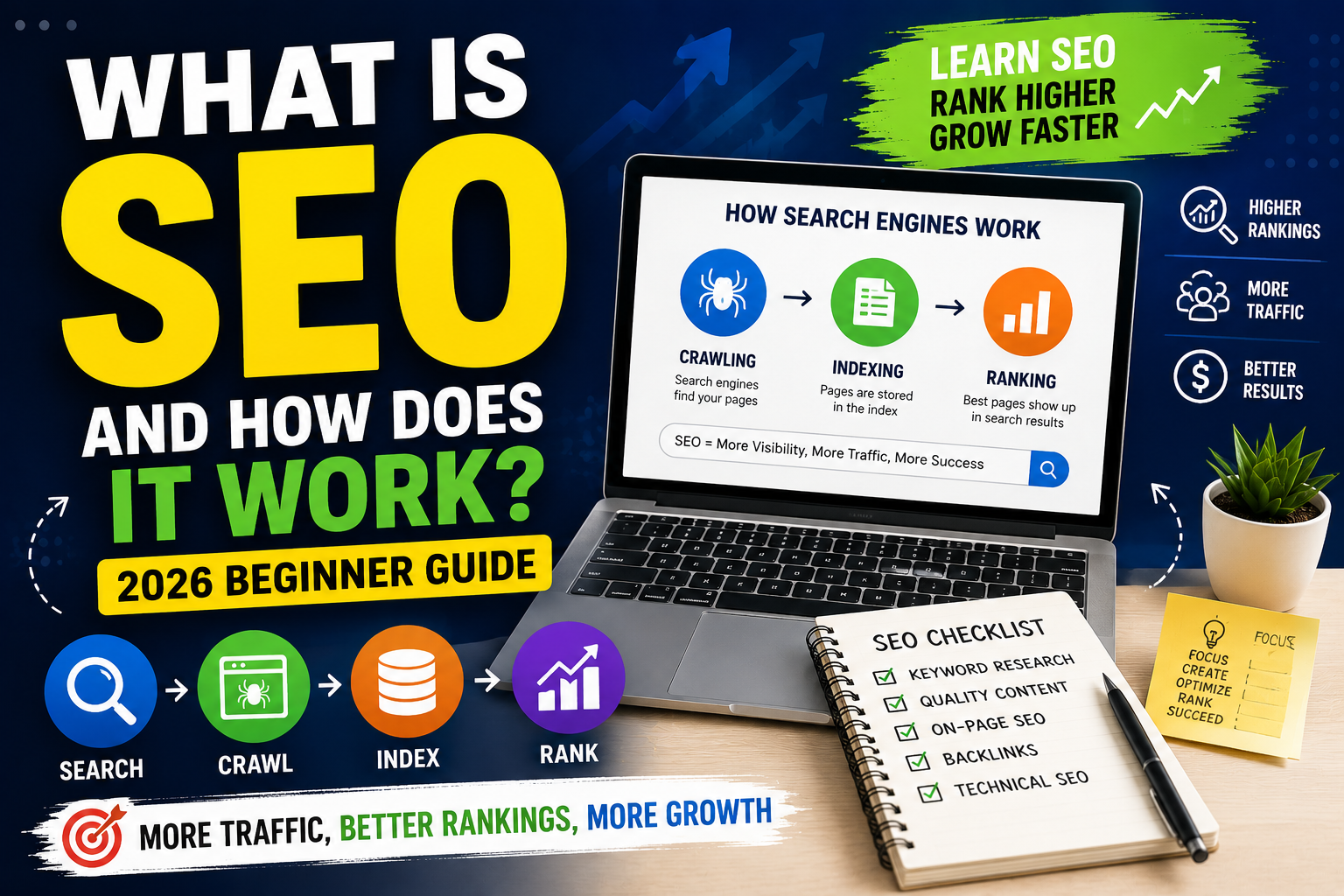
What is SEO and how does it work is one of the most common questions beginners ask before starting blogging or online business.
SEO’s all about helping websites show up higher on Google and other search engines. If you get it right, you can pull in free traffic for months—sometimes years—without paying for ads. It covers three main areas: on-page SEO, off-page SEO, and technical SEO. The good news? Anyone can start doing SEO without breaking the bank. What matters most is being consistent and creating content people actually want, not chasing quick fixes.
Introduction
Not long ago, most folks figured the only way to grow a website was to pour money into ads or push posts on social media. But things changed. In 2026, tons of sites, blogs, and small businesses rack up thousands of visitors each month from Google alone. That’s the magic of SEO.
You might not realize it, but every time you search something and click one of the top results, that’s SEO at work. And it’s not just for big companies anymore—students, freelancers, and small business owners are all getting into SEO to grow online. Some people use it for blogging, some for affiliate sites, YouTube, or running a local shop.
At first, all the jargon—rankings, backlinks, indexing, algorithms—feels overwhelming. But honestly, once you get the basics, SEO’s way easier than it sounds. This guide walks you through everything you need to know, in real words, so you can actually start using SEO.
What is SEO?
SEO stands for “Search Engine Optimization.” Basically, it’s about tweaking your website so Google (and other search engines) can figure out what you’re offering—and show it to more people. The idea’s simple: get your pages to pop up higher when folks search for stuff you talk about.
Say someone gets on Google and types:
“best ways to earn money online in India”
Google will serve results it thinks are helpful and trustworthy. SEO helps you become one of those top picks.
Why SEO Matters in 2026
SEO’s more important than ever because online competition just keeps ramping up. Every day, millions of new articles, videos, and websites go live. If you don’t do SEO, your stuff gets lost in the shuffle.
One big reason for SEO is free traffic. Unlike ads, SEO traffic can keep rolling in for ages—even after you hit “publish.” A solid article can get hits for months or even years.
Plus, folks who find you through Google are usually looking for something specific—they want info or a solution. That means search traffic converts better than random clicks from social media.
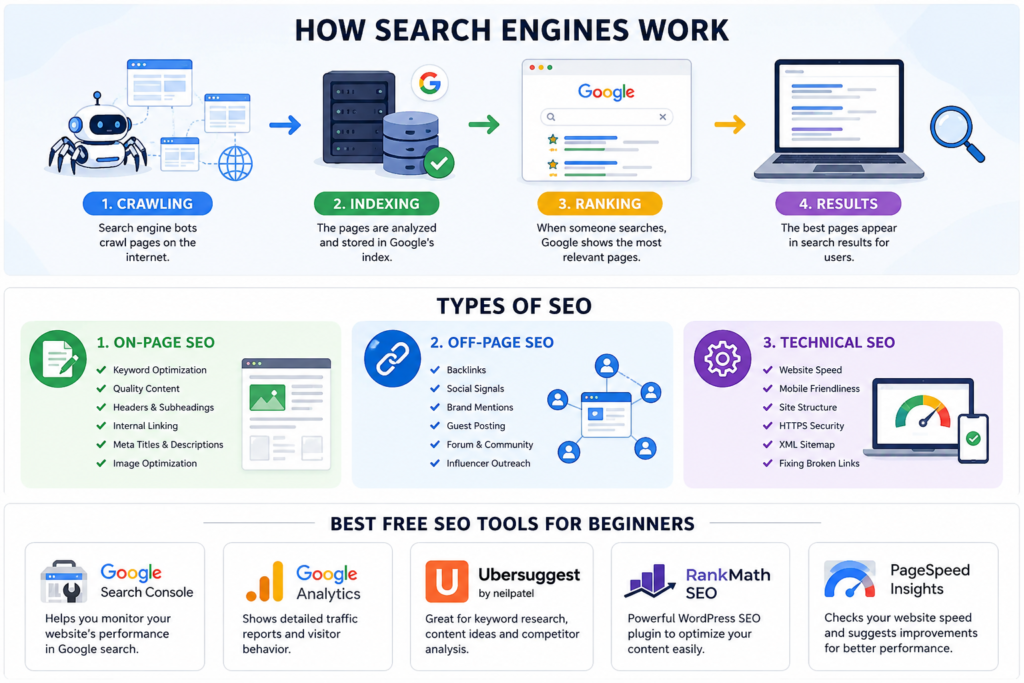
How Search Engines Work
To really “get” SEO, you have to know how search engines operate.
1. Crawling
Search engines use bots (sometimes called spiders) that scan the internet, hopping from page to page by following links. If your page is set up right, Google can find it.
2. Indexing
Once Google sees your page, it tries to figure out what it’s about. After that, it saves the page in its database (called the index). If your stuff isn’t indexed, it won’t show up in search.
3. Ranking
When someone runs a search, Google decides which pages should show up first. This is “ranking.” Lots of things influence rankings:
- Content quality
- Page speed
- Mobile-friendliness
- Backlinks
- User experience
- Whether your page matches what people are looking for
Types of SEO
1. On-Page SEO
On-page SEO covers everything you do right on your site or article:
- Using headings
- Writing helpful content
- Sprinkling in relevant keywords
- Linking to other parts of your site
- Making images load well
- Crafting neat meta descriptions
When you nail these, Google understands your page better.
2. Off-Page SEO
Off-page SEO focuses on “authority” and “trust”—mostly through backlinks. If another website links to yours, Google treats that like a recommendation. But watch out: low-quality, spammy backlinks can drag your site down, so stick to real, earned links.
3. Technical SEO
Technical SEO is about making your site work smoothly:
- Fast website speed
- Mobile responsiveness
- Clean site structure
- Secure HTTPS connection
- Fixing broken pages
Bad structure or slow loading drives users away, and Google notices.
Keyword Research for Beginners
Finding the right keywords is one of SEO’s key steps. Keywords are just the phrases people type into Google. Think:
- “best AI tools”
- “how to start blogging”
- “affiliate marketing for beginners”
Discovering the right ones shows you what people actually want.
Easy Ways to Find Keywords
—Type your topic into Google. It’ll pop up autocomplete suggestions—those are popular searches you can target.
—Check out the “People Also Ask” section in Google. Those questions make great headings for your articles.
—Use free tools like Ubersuggest or Google Keyword Planner to get search volume and competition details.
What Makes Good SEO Content?
Some people think SEO means stuffing a keyword everywhere. That’s old thinking. These days, it’s about quality and user experience.
Good SEO content has:
- Clear structure
- Helpful info
- Natural writing
- Easy readability
- Relevant headings
- Useful examples
Google’s smart. It understands natural language and what people want. Write for humans, not robots.
On-Page SEO Tips for Beginners
— Use headings—makes stuff easy to read, helps Google too
— Write solid titles—if your title’s clear and specific, more people click
— Add internal links—connect one article to another so users (and Google) can navigate better
— Optimize images—compress them, use alt text, so the site stays fast and accessible
— Keep paragraphs short, language simple. Most visitors just want plain, easy-to-read info.
Common SEO Mistakes Beginners Make
1. Keyword Stuffing
Don’t jam keywords everywhere. It looks spammy and doesn’t help. Write naturally.
2. Thin Content
Short, low-value articles rarely rank. If your stuff’s useful and detailed, it does better.
3. Ignoring Mobile Users
Most people browse on their phones. Make your site mobile-friendly, period.
4. Expecting Instant Results
SEO takes time—could be weeks, could be months. Don’t freak out if your page doesn’t show up overnight.
5. Chasing Shortcuts
Tricks and spam tactics might get you a quick win, but they rarely last. Better to build a site people trust.
Best Free SEO Tools for Beginners
- Google Search Console—tracks your site’s performance
- Google Analytics—breaks down visitor data
- Ubersuggest—for keyword research
- Rank Math SEO—WordPress plugin, easy for beginners
- PageSpeed Insights—checks your site’s speed
How Long Does SEO Take?
Everyone asks this. SEO isn’t instant. Sometimes you’ll see little wins in a few weeks, but real growth usually takes months. It depends on competition, content quality, your site’s authority, and consistency. Patience really pays off.
Can SEO Help Beginners Earn Money?
Absolutely. Tons of folks use SEO to make real income:
- Blogging
- Affiliate marketing
- Freelancing
- Growing YouTube channels
- Promoting businesses
SEO traffic is the backbone for many online businesses, so learning it’s a solid, long-term investment.
FAQs
Is SEO hard for beginners?
Nope. The basics are way easier than they look. Most people get comfortable after some hands-on practice.
Do I need paid SEO tools?
No. Free tools are enough when you’re starting out.
Can SEO work for things besides blogging?
Definitely. SEO helps YouTube channels, business sites, eCommerce, pretty much anything online.
How often should I publish?
Consistency beats quantity. Good content posted regularly works better than a flood of rushed junk.
Conclusion
SEO is one of the most valuable digital skills in 2026. It helps sites attract free traffic, boost authority, and grow for the long haul. If you’re new, it might seem overwhelming, but the basics are pretty straightforward:
- Create content people genuinely find useful
- Understand what keywords matter
- Make your site easy and pleasant for visitors
- Stick with it
SEO isn’t about gaming Google, it’s mostly about helping people find answers. Sites that actually help users end up performing best over time.
Final Action Step
Pick a topic you like. Start making helpful stuff about it. Learn SEO bit by bit. Don’t stress about perfection—focus on being steady. Tiny improvements add up to huge results in the long run.
Related Guides
How to Earn Money Online in India 2026
Freelancing vs Blogging – Which is Better in 2026?
How to Start Affiliate Marketing in India
Disclaimer: This article is for educational and informational purposes only. SEO results may vary depending on competition, content quality, and website consistency.

Adeeb Malik is the founder of Capdigitals, where he shares practical insights on digital marketing, blogging, SEO, and online earning. He focuses on simplifying complex strategies into easy, actionable steps for beginners. The content is based on research, real-world concepts, and learning resources. All information is for educational purposes only and does not constitute financial or business advice.