
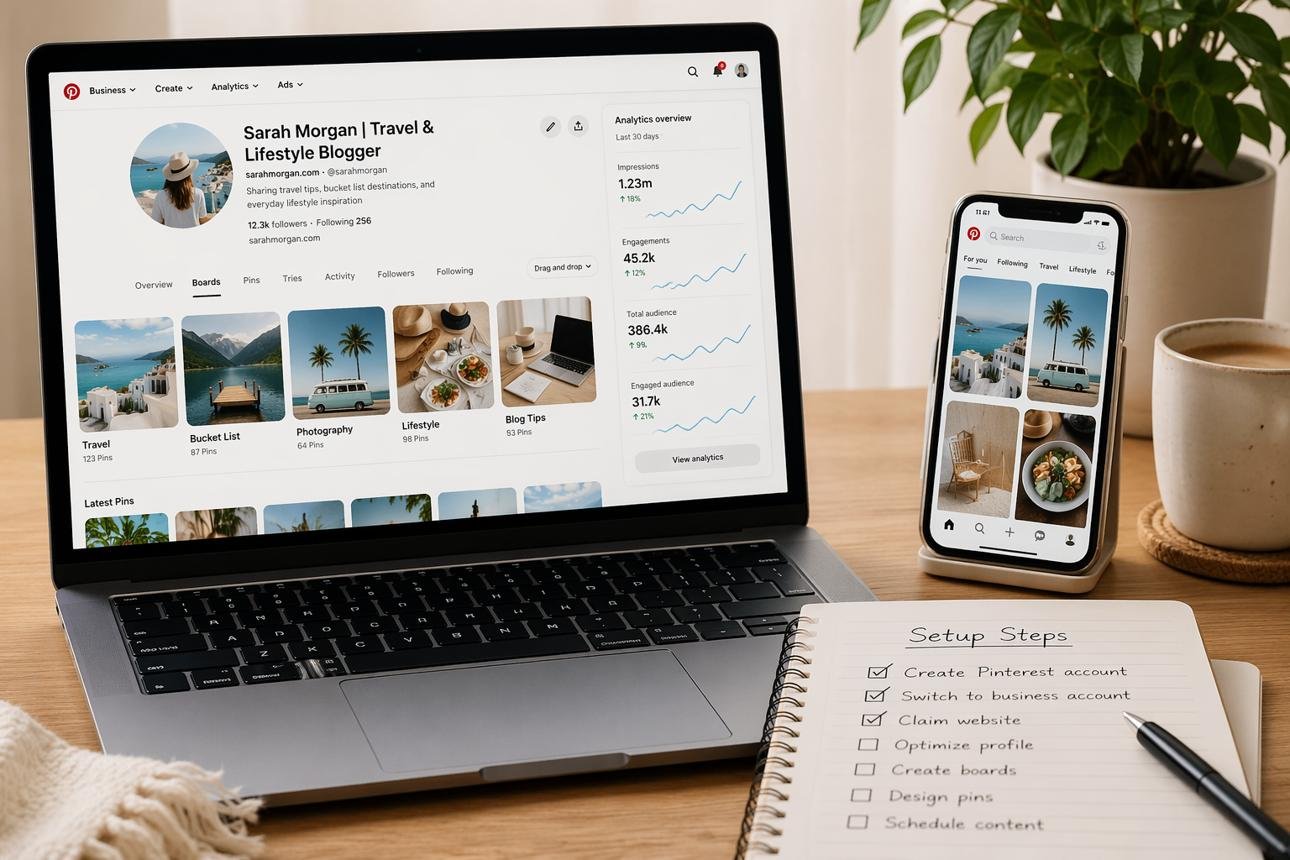
How to Make Money With Pinterest Affiliate Marketing: A Complete Beginner’s Guide
Pinterest is more than a platform for discovering recipes, fashion ideas, home decorations, and travel inspiration. It can also be a useful marketing platform for people who want to earn money online through affiliate marketing.
With Pinterest affiliate marketing, you recommend products or services by creating attractive Pins that contain affiliate links. When someone clicks your link and completes a qualifying purchase, you may earn a commission from the company or affiliate program.
One of the biggest advantages of this business model is that you do not necessarily need to create your own products, manage inventory, or handle customer orders. Your main responsibility is to connect interested people with products that solve their problems or meet their needs.
However, making money with Pinterest affiliate marketing requires more than posting random product pictures. You need to choose the right niche, join suitable affiliate programs, create useful content, understand Pinterest SEO, and build trust with your audience.
In this guide, you will learn how to make money with Pinterest affiliate marketing step by step.
1. Understand How Pinterest Affiliate Marketing Works
Affiliate marketing is a business model in which you promote another company’s products or services in exchange for a commission on qualifying sales or other approved actions.
Pinterest helps you reach people who are searching for ideas, recommendations, inspiration, and products.
Here is how the process works:
- You create a Pinterest account.
- You choose a niche, such as fashion, technology, home decor, or personal finance.
- You join an affiliate program and receive a unique tracking link.
- You create attractive Pins featuring relevant products.
- You add your affiliate link as the destination URL when permitted.
- Pinterest users discover your Pins and click the links.
- If someone completes a qualifying purchase, you may earn a commission.
For example, imagine you promote a home organization product through an affiliate program. You create a Pin titled “10 Smart Storage Ideas for Small Bedrooms.” Someone discovers the Pin, clicks your product link, and purchases the recommended item. If the purchase meets the affiliate program’s conditions, you receive a commission.
Pinterest does not pay these commissions directly. Payments are handled by the affiliate company or network according to its terms.
2. Choose a Profitable Pinterest Niche
Choosing the right niche is one of the most important steps in affiliate marketing. Your niche determines the type of products you promote and the audience you attract.
Instead of promoting products from every category, concentrate on one main subject.
Here are some popular Pinterest affiliate marketing niches:
Home Decor and Organization
This niche includes furniture, bedroom decorations, kitchen accessories, storage solutions, lighting, and home improvement products.
Content ideas include:
- Small bedroom decoration ideas.
- Affordable living room furniture.
- Kitchen organization products.
- Storage solutions for small apartments.
- Minimalist home decoration inspiration.
Fashion and Beauty
Fashion and beauty are popular topics for visual content. You can promote clothing, shoes, accessories, skincare products, makeup tools, and beauty equipment.
Content ideas include:
- Affordable fashion ideas.
- Everyday outfit inspiration.
- Makeup products for beginners.
- Fashion accessories worth buying.
- Skincare organization ideas.
Always make accurate claims about beauty and skincare products, and avoid unsupported medical promises.
Technology and Gadgets
Technology is another potential niche for affiliate marketers.
You can promote headphones, computer accessories, smartphone equipment, keyboards, office gadgets, and other useful devices.
Content ideas include:
- Best desk accessories for productivity.
- Useful gadgets for students.
- Home office equipment ideas.
- Affordable accessories for laptops.
- Technology gifts for beginners.
Health, Fitness, and Lifestyle
This niche includes fitness equipment, workout accessories, sports clothing, water bottles, and healthy lifestyle products.
Content ideas include:
- Home workout equipment.
- Fitness accessories for beginners.
- Simple exercise equipment for small spaces.
- Workout clothing recommendations.
- Useful products for an active lifestyle.
Be particularly careful with health-related claims and regulated products.
Personal Finance and Business
You can also create content about budgeting tools, productivity resources, business books, educational products, and software.
Content ideas include:
- Budget planning templates.
- Best productivity tools for entrepreneurs.
- Books about personal finance.
- Tools for managing a small business.
- Resources for starting an online business.
Choose a niche that interests you and has products that people are actively looking for.
3. Create a Pinterest Business Account
A Pinterest business account gives you access to useful features, including analytics and tools for understanding how people interact with your content.
You can create a new business account or convert an existing personal account.
Follow these steps:
- Visit Pinterest and create an account or sign in.
- Choose the option to create a business account.
- Enter your business or brand name.
- Select a category that describes your content.
- Add a profile photograph or logo.
- Write a clear profile description.
- Complete the available account information.
Your profile should explain what visitors can expect from your account.
For example:
“Discover affordable home decor, smart organization ideas, and useful products to make everyday living easier.”
If you have a website, you can also connect it to your Pinterest profile where appropriate.
4. Join Affiliate Marketing Programs
After choosing your niche, the next step is joining affiliate programs that offer products relevant to your audience.
An affiliate program provides unique tracking links that allow companies to identify sales generated through your promotions.
Some affiliate programs and networks worth researching include:
Amazon Associates
<text>Amazon Associates</text> allows eligible participants to promote products available through Amazon and earn commissions on qualifying purchases.
It can be useful for niches such as technology, home decor, fashion, books, and everyday products.
Review its application requirements, commission rates, and rules about where and how affiliate links may be shared.
ShareASale
ShareASale connects publishers with merchants offering affiliate partnerships in different industries. You can research programs related to fashion, home products, business, and lifestyle.
Awin
Awin is an affiliate marketing network with merchants across multiple industries. It provides access to different brands and product categories.
Rakuten Advertising
Rakuten Advertising connects publishers with brands and merchants. Its available programs and acceptance requirements vary.
LTK
LTK is particularly relevant to creators who produce lifestyle, fashion, and shopping-related content. Check its current creator eligibility requirements before applying.
Other Affiliate Programs
You can also research individual companies that operate their own affiliate programs. Some software companies, online learning platforms, and digital product businesses offer affiliate opportunities.
Important: Always check whether an affiliate program permits promotion on Pinterest. Some programs have additional restrictions on social media, direct linking, or advertising.
5. Research Products People Actually Want to Buy
Joining an affiliate program does not automatically generate income. You need to promote products that match what your target audience is searching for.
Before choosing a product, consider the following:
- Is the product relevant to your niche?
- Does it solve a real problem?
- Is the product information clear?
- Does the merchant have a trustworthy reputation?
- Is the product available to your intended audience?
- Does the affiliate program offer reasonable commission terms?
- Are there restrictions on promoting the product through Pinterest?
For example, if your niche is home organization, promoting storage boxes, closet organizers, kitchen racks, and desk organizers may make more sense than promoting unrelated electronics.
Try to recommend products you understand. Honest recommendations help you build credibility and encourage repeat visits.
6. Create Attractive Pinterest Pins
Pinterest is a visual discovery platform, so the quality of your Pins matters.
A Pin should catch attention, communicate a useful idea, and encourage people to learn more.
You can use design tools such as Canva to create professional-looking graphics without advanced design experience.
Some useful Pin ideas include:
- Product recommendation graphics.
- Product comparison designs.
- Shopping guides.
- Step-by-step tutorials.
- Gift recommendation lists.
- Before-and-after organization ideas.
- Informational infographics.
For example, if you promote kitchen organization products, you could create a Pin titled:
“7 Kitchen Organization Products That Save Space”
Use a clear image, readable text, and a design that matches the product being promoted.
Avoid misleading product pictures or exaggerated claims. The destination page should match what your Pin promises.
7. Write SEO-Friendly Pinterest Titles and Descriptions
Pinterest users often discover content by searching for specific keywords. This makes keyword research an important part of your strategy.
You should understand what your target audience is searching for and include relevant phrases naturally in your Pin titles and descriptions.
For example, if you promote home office products, possible keywords include:
- Home office ideas.
- Desk organization ideas.
- Small office setup.
- Work from home essentials.
- Affordable office accessories.
A good Pin title might be:
“10 Affordable Home Office Accessories for a Better Workspace”
A suitable description could be:
“Discover practical home office accessories that can help you organize your desk and create a comfortable workspace. Explore useful ideas for small offices, remote workers, and students.”
Use relevant keywords naturally rather than repeating the same phrases excessively.
Your titles and descriptions should accurately describe the content and products featured in the Pin.
8. Add Your Affiliate Links Correctly
Once your Pin is ready, you can add the relevant affiliate link as its destination URL when permitted by Pinterest and your affiliate program.
The link should take users to the actual product or relevant destination described in your Pin.
For example:
- Pin title: Best Desk Lamps for Home Offices.
- Product: A desk lamp available through an affiliate merchant.
- Destination URL: Your unique affiliate tracking link for that product.
Pinterest’s official guidance explains that affiliate links can be added to Pins and recommends linking directly to the relevant product detail page.
Always check your links to make sure they work properly. Some URL shorteners and redirect services are not supported.
You can also create a blog post containing useful product recommendations and link your Pinterest Pin to that article. This approach gives you more room to explain the products, compare alternatives, and provide helpful information.
However, make sure your affiliate program allows the traffic and linking method you use.
9. Disclose Your Affiliate Relationships
Transparency is essential when promoting products for commissions.
People should understand that you may earn money when they purchase through your affiliate links.
You can include a clear disclosure in your Pin description or near affiliate links on your website.
For example:
“Affiliate disclosure: I may earn a commission if you purchase through links in this Pin, at no additional cost to you.”
You should also follow the relevant disclosure requirements of your affiliate program, Pinterest, and advertising laws.
Pinterest’s commercial content guidelines require transparency about affiliate content and prohibit spammy promotional behavior.
Do not hide affiliate relationships or make it appear that a company has personally endorsed you when it has not.
10. Publish Consistently Without Spamming
Consistency helps you develop a recognizable presence and gives your content more opportunities to reach interested users.
However, posting hundreds of nearly identical affiliate Pins is not a good strategy.
Pinterest expects affiliate content to be original and useful. Its guidelines discourage repetitive or excessive affiliate posting, fake engagement, and artificial manipulation of traffic.
A more effective approach is to create a manageable publishing schedule.
For example, you could plan your weekly content like this:
| Day | Content idea |
|---|---|
| Monday | Product recommendation |
| Tuesday | Helpful tutorial |
| Wednesday | Product comparison |
| Thursday | Shopping guide |
| Friday | Educational infographic |
| Saturday | Product review |
| Sunday | Lifestyle inspiration |
You can adjust the schedule based on your time and audience.
Focus on quality, relevance, and original ideas rather than trying to publish as many Pins as possible.
11. Use Pinterest Analytics to Improve Your Results
Pinterest Analytics helps you understand how your content performs.
A business account provides access to information that can help you evaluate your marketing strategy.
Important measurements include:
Impressions: How many times your Pins appeared on the platform.
Saves: How often people saved your Pins to their boards.
Outbound clicks: How many times users clicked through to your destination website or link.
Engagement: How people interacted with your content.
For affiliate marketing, outbound clicks are particularly important because they show whether people are leaving Pinterest to visit your affiliate destination.
You should also review your affiliate dashboard to understand clicks, conversions, approved sales, and commissions.
If a Pin receives many impressions but few clicks, you may need to improve its design, title, or relevance.
If people click but do not purchase, review the product, price, destination page, and audience match.
Use this information to improve your future content.
12. Combine Pinterest With a Blog
One useful way to expand your affiliate marketing business is by combining Pinterest with a website or blog.
Instead of sending every visitor directly to a product page, you can create helpful articles that explain the products you recommend.
For example, if your niche is technology, you could publish articles such as:
- Best Budget Laptops for Students.
- 10 Useful Accessories for a Home Office.
- Best Wireless Headphones for Everyday Use.
- Essential Gadgets for Remote Workers.
You can then create Pinterest Pins that lead readers to those articles.
Your blog gives you more space to provide comparisons, product descriptions, advantages, disadvantages, and recommendations.
It also creates an opportunity to attract visitors from search engines and build an online asset that you control.
Remember to include clear affiliate disclosures in your articles and follow the rules of each affiliate program.
13. Common Pinterest Affiliate Marketing Mistakes to Avoid
Many beginners struggle because they focus too much on posting affiliate links and not enough on creating useful content.
Avoid these common mistakes:
Promoting too many unrelated products: Choose a clear niche so your audience understands what your account offers.
Using low-quality images: Poorly designed Pins may fail to communicate the value of a product.
Ignoring keyword research: Use relevant search phrases to help people discover your content.
Failing to disclose affiliate links: Always make your commercial relationship clear.
Posting repetitive content: Create original Pins that offer different ideas, useful information, or genuine recommendations.
Promoting products you do not understand: Research products carefully before recommending them.
Expecting instant income: Affiliate marketing takes time, testing, and consistent effort. There is no guaranteed income or fixed timeline for success.
Ignoring affiliate program rules: Read the terms of each program and follow its requirements for social media promotion and payments.
14. A Simple 30-Day Pinterest Affiliate Marketing Plan
If you are starting from zero, the following plan can help you organize your first month.
Week 1: Set Up Your Foundation
- Choose one profitable niche.
- Research products that match your audience.
- Create a Pinterest business account.
- Write a professional profile description.
- Research suitable affiliate programs.
Week 2: Join Affiliate Programs and Prepare Content
- Apply to relevant affiliate programs.
- Read their promotion policies.
- Choose suitable products.
- Research Pinterest keywords.
- Create your first group of original Pins.
Week 3: Publish and Improve
- Publish useful Pins consistently.
- Write relevant titles and descriptions.
- Add permitted affiliate destination links.
- Include clear disclosures.
- Check that your links work correctly.
Week 4: Analyze and Optimize
- Review your Pinterest Analytics.
- Identify Pins receiving the most engagement.
- Check outbound clicks.
- Review affiliate link performance.
- Improve weak designs and descriptions.
- Plan your next month of content.
The purpose of this plan is to establish a working system. It does not guarantee sales or commissions within 30 days.
Frequently Asked Questions (FAQs)
1. Can I make money with Pinterest affiliate marketing without a website?
Yes. Pinterest allows affiliate links on Pins when they comply with its policies and your affiliate program’s terms. You can direct users to relevant product pages using approved affiliate links. A website is optional, although it can provide additional opportunities to publish detailed reviews and comparisons.
2. Does Pinterest pay affiliate marketers directly?
No. Pinterest does not directly pay commissions for ordinary affiliate links. You receive payments from the affiliate company, merchant, or network according to its payment terms.
3. Do I need many followers to start Pinterest affiliate marketing?
You do not necessarily need a large following. Pinterest users can discover Pins through search and recommendations. Relevant content, keyword targeting, and useful product recommendations can help you reach people beyond your existing followers.
4. Is Pinterest affiliate marketing free?
You can start with a free Pinterest account and free design tools. However, some affiliate programs, software, or optional marketing tools may have additional requirements or costs.
5. Which products are best for Pinterest affiliate marketing?
Products that are visually appealing and solve specific problems can be suitable. Examples include home decor, kitchen accessories, fashion products, technology gadgets, books, and productivity tools. The best products depend on your niche and audience.
6. How long does it take to earn money from Pinterest affiliate marketing?
There is no fixed timeline. Some people may generate sales relatively early, while others need months of testing and improvement. Your results depend on content quality, audience demand, product selection, traffic, and conversion rates.
7. Can beginners succeed with Pinterest affiliate marketing?
Yes. Beginners can start by learning Pinterest, choosing a focused niche, creating original content, and promoting relevant products. Building a reliable income takes time and should not be treated as guaranteed.
Conclusion
Pinterest affiliate marketing can be a practical way to earn money online by recommending products and connecting interested users with businesses.
You do not need to manufacture products, manage inventory, or build a large company before getting started. You need a clear niche, a suitable affiliate program, useful content, attractive Pins, and a strategy for reaching the right audience.
Start by creating a Pinterest business account and choosing one niche. Research affiliate programs, prepare original product recommendations, and learn how to use keywords to improve content discovery.
Most importantly, focus on helping people make informed decisions instead of simply posting affiliate links. When your content provides genuine value and follows platform policies, you have a stronger foundation for building a long-term affiliate marketing business.
SEO Details
SEO Title: How to Make Money With Pinterest Affiliate Marketing
Focus Keyword: Pinterest affiliate marketing
URL Slug: make-money-with-pinterest-affiliate-marketing
Meta Description: Learn how to make money with Pinterest affiliate marketing. Discover profitable niches, affiliate programs, Pin SEO, product promotion, and beginner strategies.
Category: Affiliate Marketing
Tags: Pinterest Affiliate Marketing, Make Money Online, Affiliate Marketing for Beginners, Pinterest Marketing, Passive Income, Affiliate Programs, Online Business, Pinterest SEO, Digital Marketing, Affiliate Links

Adeeb Malik is the founder of Capdigitals, where he shares practical insights on digital marketing, blogging, SEO, and online earning. He focuses on simplifying complex strategies into easy, actionable steps for beginners. The content is based on research, real-world concepts, and learning resources. All information is for educational purposes only and does not constitute financial or business advice.