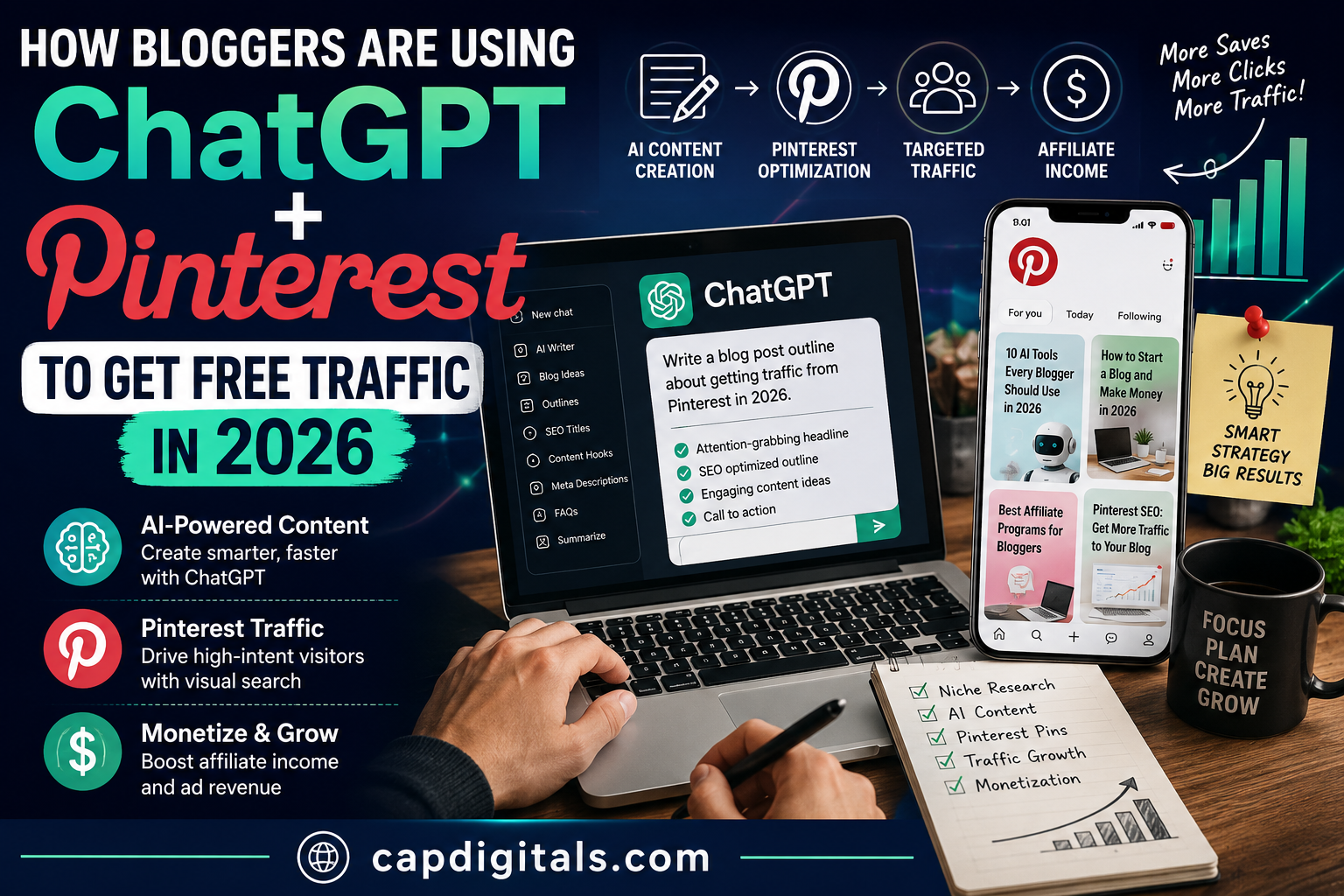
ChatGPT + Pinterest is quietly becoming one of the biggest traffic growth strategies for modern bloggers. The traditional blogging playbook is completely broken. Over the last two years, relying solely on Google SEO has turned into a high-risk gamble. Between core algorithm updates that wipe out small publishers overnight and AI search summaries scraping your best paragraphs, waiting six months for organic rankings is no longer a viable strategy for new websites. Yet, while the internet claims blogging is dead, a smart circle of creators is quietly pulling massive numbers using an entirely different channel—pairing ChatGPT with Pinterest.
The beauty of this system is that it bypasses the standard Google sandbox entirely. Instead of fighting an uphill battle against multi-million dollar media houses for keywords, bloggers are using visual search to catch high-intent audiences on day one. But let’s clear up a massive misconception immediately: this isn’t about generating thousands of trashy AI articles and dumping them on Pinterestboards. Spam triggers platform blocks faster than ever. The real magic lies in using AI to scale up your conceptual speed while executing a very precise visual marketing script.
This comprehensive deep-dive by Capdigitals.com strips away the fake guru hype to show you exactly how hybrid creators are combining AI workflows with Pinterest search behavior to build sustainable affiliate and ad revenue channels.
The Pivot: Why Visual Search is Saving Small Blogs
Let’s be real about traditional search engines—the current landscape heavily favors established authority domains. If you start a fresh lifestyle, finance, or tech niche site today, getting your articles onto page one of Google requires serious backlink capital and immense patience. This bottleneck has forced individual creators to diversify their traffic pipelines from the very first week.
Pinterest is the perfect alternative because it doesn’t function like a standard social media network. On Instagram or TikTok, your post has a shelf life of about 24 to 48 hours before the algorithm buries it. Pinterest, however, is a visual discovery engine. A well-optimized pin targeting a specific user intent can sit on the platform, accumulate saves, and drive targeted referral clicks to your website for months—even years—after you hit publish.
How Smart Creators Integrate ChatGPT Into Their Routine
The goal isn’t to let the AI do 100% of the thinking; it’s about slicing your content production time by two-thirds. Instead of staring at a blank Google Doc for hours trying to map out a structural flow, bloggers use ChatGPT as an advanced editorial assistant. The workflow shifts from pure content creation to high-speed editing:
- Sifting Through Low-Competition Angles: Feeding the AI historical audience data to brainstorm sub-topics that standard keyword tools often miss.
- Speed-Drafting Outlines: Forcing ChatGPT to structure long-form layouts using highly specific semantic subheadings (H2 and H3 tags) tailored for user intent.
- Batching Pin Copy: Instructing the LLM to generate twenty different variations of high-click-through titles and descriptions packed with relevant hashtags.
Once the AI serves up the initial framework, a human editor steps in to inject real-world case studies, personal experiences, unique screenshots, and individual voice. That final 30% of human polish is what keeps your site safe from low-quality quality flags.
The 2026 Pinterest Niche Expansion
If you still think Pinterest is exclusively meant for wedding planners, interior design mood boards, and home recipes, your data is outdated. The platform’s demographics have shifted dramatically. Right now, some of the fastest-growing search trends belong to categories that were completely invisible here a few years ago:
- Side hustle blueprints and remote work guides
- AI tool comparisons and digital productivity hacks
- Micro-SaaS tutorials and automated affiliate frameworks
- Personal finance management and low-risk investment setups
The Exact Step-by-Step Traffic Blueprint
The underlying system driving consistent referral traffic down to monetized landing pages follows a tight, operational loop:
- Identify high-volume visual searches using the native Pinterest Trends tool.
- Prompt ChatGPT to write an in-depth, problem-solving informational article targeting that query.
- Manually edit the draft, making sure it features rich data charts and a clear internal linking structure to your affiliate products.
- Design 3 to 5 visually distinct vertical pin graphics (using a 2:3 ratio) on Canva for that single URL.
- Write different keyword-rich meta descriptions for each pin using AI variations to capture diverse search terms.
- Schedule the assets to drop consistently over a two-week window using an automation tool like Tailwind or native scheduling.
The Monetization Angle: High-intent Traffic Conversion
Why do these clicks convert so well compared to standard social media referrals? Because people don’t browse Pinterest to see what their friends are doing—they use it to plan projects, learn skills, or buy solutions. Their buying intent is incredibly high from the moment they enter a search phrase.
Instead of relying on low-payout display ad networks, top creators tie this traffic directly into high-commission affiliate programs. Whether it’s web hosting packages, software trials, digital template bundles, or premium masterclasses, a highly targeted stream of 10,000 monthly visitors from Pinterest can easily outperform a generic 50,000 Google search stream in terms of pure monetization.
Debunking the Follower Count Myth
One of the biggest reasons beginners give up on traffic generation is the fear of starting from zero. On platforms like YouTube or Instagram, your reach is heavily restricted until you build a massive subscriber footprint. Pinterest breaks this rule entirely.
Because it operates as a search engine, individual pins rank based on keyword relevance, graphic engagement, and click-through rates—not your profile’s follower metrics. A completely fresh account with zero followers can put out a high-quality pin that hits the viral smart feed within a few days if it perfectly matches what users are looking for at that exact moment.
Will Google Penalize Blogs Using This System?
Let’s address the elephant in the room. Google’s webmaster guidelines have explicitly stated that the use of AI-assisted content creation is not against their rules, provided the final output delivers genuine value, original insights, and high editorial quality. The sites that get penalized are spam farms that copy-paste thousands of unedited AI articles to manipulate search engines.
By using Pinterest as your primary traffic engine, you decouple your business from Google’s mood swings. And ironically, as your Pinterest traffic grows, your brand authority increases, which often results in your site naturally picking up organic rankings on Google anyway due to steady user signals.
Final Strategy: The Hybrid Creator Wins
The internet isn’t running out of traffic; it is just rewarding a different type of creator. The bloggers dominating the revenue charts in 2026 aren’t purists who spend a week hand-crafting a single article, nor are they spammers running automated text generators. The winners are hybrid creators—people who treat AI tools like a supercharged engine to handle the heavy lifting, while keeping their hands firmly on the strategic wheel.
For real-time breakdowns of changing algorithm patterns, AI optimization strategies, and sustainable digital business growth blueprints, make sure to keep tracking updates on Capdigitals.com.

Adeeb Malik is the founder of Capdigitals, where he shares practical insights on digital marketing, blogging, SEO, and online earning. He focuses on simplifying complex strategies into easy, actionable steps for beginners. The content is based on research, real-world concepts, and learning resources. All information is for educational purposes only and does not constitute financial or business advice.